

Pressure Seal Globe Valves for High-Pressure Steam and Industrial Piping
Heavy-duty body-to-bonnet sealing valves for high-temperature fluid isolation and continuous throttling control.
-
![Pressure Seal Angle Globe Valve]() Pressure Seal Angle Globe ValveThe Pressure Seal Angle Globe Valve combines high-pressure self-sealing bonnet technology with a 90-degree body layout for throttling and isolation in thermal steam and high-pressure liquid lines.view more
-
![Pressure Seal Y-Pattern Globe Valve]() Pressure Seal Y-Pattern Globe ValveThe Pressure Seal Y-Pattern Globe Valve delivers tight shutoff and flow regulation in high-pressure, high-temperature steam and fluid pipelines. Its 45-degree inclined body design minimizes internalview more
-
![Butt Weld Pressure Seal Globe Valve]() Butt Weld Pressure Seal Globe ValveButt Weld Pressure Seal Globe Valves integrate internal system pressure to secure body-bonnet sealing under extreme temperature and pressure conditions. Designed for rigid piping systems in severeview more
-
![Cast Steel Pressure Seal Globe Valve]() Cast Steel Pressure Seal Globe ValveThe Cast Steel Pressure Seal Globe Valve provides fluid isolation and throttling in high-pressure, high-temperature piping systems. Utilizing line fluid pressure to force the bonnet assembly againstview more
-
![Forged Pressure Seal Globe Valve]() Forged Pressure Seal Globe ValveForged Pressure Seal Globe Valves provide reliable shut-off and precise throttling service in extreme high-pressure and high-temperature steam, water, and process fluid applications. Featuring aview more
-
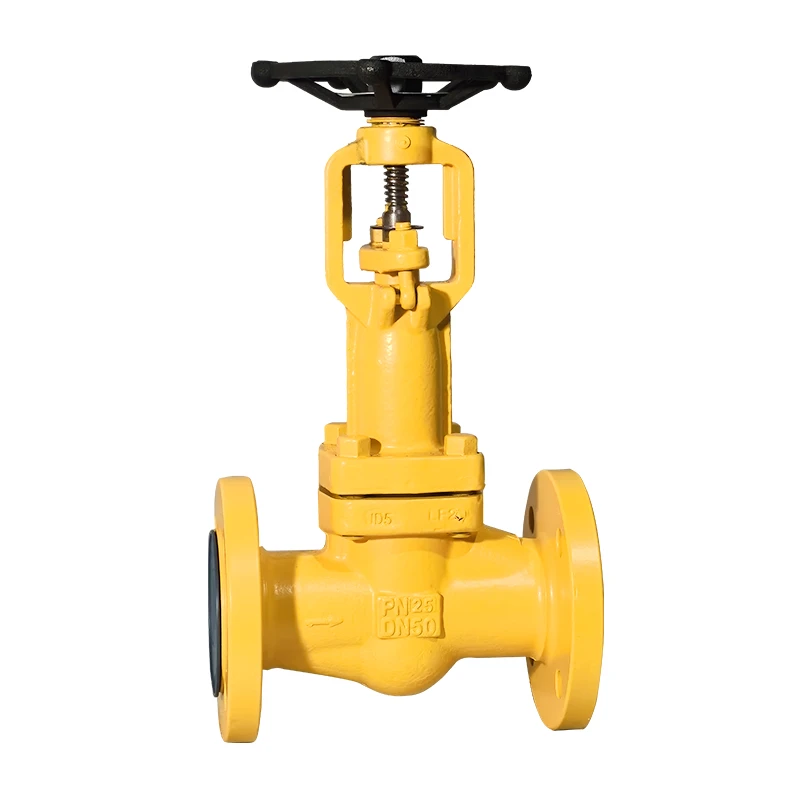
![Flanged Pressure Seal Globe Valve]() Flanged Pressure Seal Globe ValveThe Flanged Pressure Seal Globe Valve handles severe isolation and throttling duties in high-pressure, elevated-temperature fluid systems. Internal pipeline pressure energizes the bonnet gasket,view more


Category Overview
Pressure seal globe valves utilize internal line fluid pressure to force a flexible metallic sealing ring against the body cavity wall, creating a self-tightening bonnet joint that prevents leaks during extreme pressure surges and thermal cycling. This construction eliminates heavy external bonnet bolting, reducing valve weight while increasing structural integrity in main steam lines, boiler feedwater networks, and severe gas headers. Available in sizes from NPS 2 to 24 (DN 50 to 600) and pressure ratings from ASME Class 600 to Class 2500, these valves are supplied in carbon steel, chrome-moly alloy steel, and stainless steel formulations. Every manufactured unit undergoes shell proof testing, seat leakage evaluation, and non-destructive examination in strict accordance with API 598 and ASME B16.34 standards.
Pressure Seal Globe Valve Design Features
Self-Tightening Pressure Seal Bonnet
Internal fluid pressure forces the precision-machined metallic seal ring against the body cavity wall, increasing joint tightness as operating pressure rises.
Hardfaced Seating Surfaces
Seat ring and plug seating faces are overlaid with Stellite hardfacing alloy to prevent wire-drawing, erosion, and galling under high-velocity differential pressure.
Fully Guided Plug Assembly
Stem-guided plug design prevents disc oscillation, stem bending, and uneven seat ring wear during severe throttling service.
Integral Upper Backseat
Precision-machined stem shoulder engages against the bonnet backseat in the fully open position, allowing stuffing box isolation under line pressure.
Live-Loaded Packing Assembly
Graphite packing set incorporates corrosion inhibitors and Belleville spring washers to maintain constant sealing pressure during fluctuating temperature cycles.
Standardized Actuator Top Flange
Machined yoke mounting dimensions conform to international actuator standards, permitting direct installation of gear operators, electric actuators, or pneumatic cylinders.
Pressure Seal Globe Valve Specifications
|
Parameter |
Technical Specification |
|
Size Range |
NPS 2 to 24 (DN 50 to 600) |
|
Pressure Class |
ASME Class 600, 900, 1500, 2500 |
|
Body Materials |
ASTM A216 WCB, A217 WC6, A217 WC9, A217 C12A, A351 CF8M |
|
End Connections |
ASME B16.25 Butt Weld, ASME B16.5 Flanged (RF, RTJ) |
|
Operation |
Handwheel, Bevel Gear, Electric Actuator, Pneumatic Actuator |
|
Design Standards |
API 623, API 600, ASME B16.34 |
|
Testing Standards |
API 598, ISO 5208 |
|
Temperature Range |
-29°C to 600°C (Material Dependent) |
Materials, Pressure Ratings and Temperature Range
Body Materials
Carbon Steel (ASTM A216 WCB): Intended for clean steam, boiler feed water, and non-corrosive industrial liquids up to 425°C.
Alloy Steel (ASTM A217 WC6, WC9, C12A): Chromium-molybdenum steel formulations built for high-temperature steam distribution lines up to 600°C.
Stainless Steel (ASTM A351 CF8M): Austenitic alloy selected for aggressive chemical process streams and elevated-temperature acids.
Duplex Stainless Steel (ASTM A890 4A): High-strength metallurgy tailored for chloride-laden environments and marine processing.
Pressure Classes
Class 600: High-pressure industrial process lines.
Class 900: High-pressure steam distribution networks.
Class 1500: Superheated steam lines and power station piping.
Class 2500: Extreme pressure boiler feed systems and severe process applications.
Temperature Boundaries
Operating limits depend on the selected body metallurgy, hardfaced seating options, and stem packing materials. Hardfaced contact zones maintain structural stability across the entire designated thermal range.

Design Standards, Testing and Certifications
API 623 / API 600
Heavy-duty flanged and butt-welding steel globe valves for process pipelines.
01
ASME B16.34
Pressure-temperature ratings, wall thickness minimums, and structural requirements.
02
ASME B16.25
Preparation and tolerances for butt-welding ends.
03
API 598
Shell hydrostatic proof testing, high-pressure closure testing, and low-pressure air seat testing.
04
ISO 15848-1
Fugitive emissions evaluation certifying low-leakage packing arrangements.
05
Applications of Pressure Seal Globe Valves
Power Generation Facilities
Controls main steam headers, boiler feedwater systems, turbine bypass lines, and superheater drains.

Oil & Gas Processing
Regulates high-pressure hydrocarbon streams, gas compression manifolds, and high-differential pressure process lines.

Petrochemical Plants
Manages thermal fluid circuits, catalytic cracking units, and aggressive chemical feed streams.

Refineries
Handles hydrogen compression circuits, hydrocracker feed systems, and high-pressure steam distribution.
Why Choose Us
Valve Manufacturing Experience
Continuous production of heavy industrial valves guarantees strict metallurgical control, proper heat treatment, and precise machining tolerances.
Complete In-House Inspection Procedures
Raw castings and weld seams undergo Radiographic, Ultrasonic, Magnetic Particle, and Liquid Penetrant testing before pressure testing.
CNC Machining Operations
Computer-controlled turning and milling deliver accurate stem thread geometry, smooth seal cavity surfaces, and uniform Stellite seat overlays.
Material Traceability Documentation
Every heat of raw material maintains full tracking from foundry pouring to final assembly, accompanied by Material Test Reports conforming to EN 10204 3.1.
Custom Pressure Seal Globe Valve Solutions
Engineering modifications adapt standard valves to specialized plant layouts and severe process environments:
Customized face-to-face dimensions and end weld bevel angles.
Extended hardfacing overlays for severe slurry or abrasive services.
Custom actuator mounting yokes and extended stems for insulated lines.
Low-temperature carbon steel body configurations for cold ambient conditions.
Fabrication based on provided engineering datasheets and line specifications.
Send valve specifications, datasheets, or piping schedules to receive technical proposals and commercial quotations.

Frequently Asked Questions

Request a Technical Quote for Pressure Seal Globe Valves
Submit required valve dimensions, pressure ratings, body materials, end connection types, operating media, and operating temperature range. Engineering specialists will review your parameters and provide a formal proposal.
As one of the most professional pressure seal globe valves manufacturers and suppliers in China, we have world-leading production equipment and strong manufacturing capabilities. Please feel free to wholesale advanced pressure seal globe valves at competitive price from our factory.


