Introduction
Modern power generation facilities operate at the absolute outer limits of thermodynamic and mechanical endurance. In the relentless pursuit of higher thermal efficiency and reduced carbon footprints, contemporary coal-fired, combined-cycle gas, and nuclear power plants have transitioned to supercritical and ultra-supercritical operating regimes. Within these systems, process fluids-primarily water and steam-are subjected to pressures exceeding 300 bar and temperatures surging past 600 degrees Celsius. In such an unforgiving operational landscape, the failure of a single piping component can trigger catastrophic unscheduled shutdowns, millions of dollars in lost revenue, and severe risks to human life.
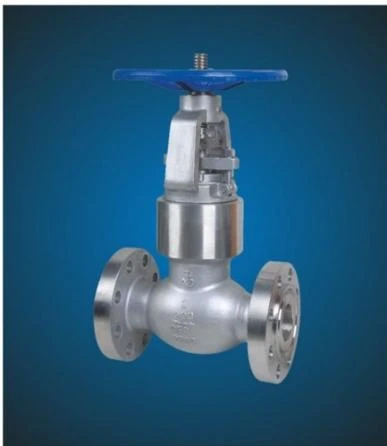
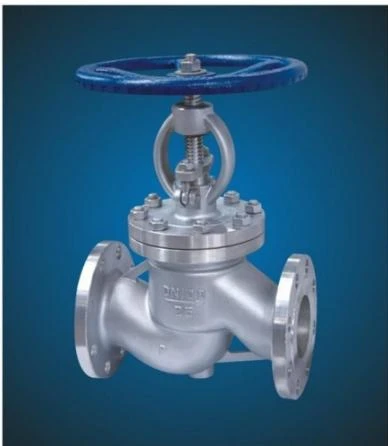
To withstand these brutal conditions, mechanical engineers do not merely look for valves that can open and close; they require components that offer absolute sealing integrity, fine-tuned throttling capabilities, and flawless structural reliability over decades of service. This is exactly why the power generation industry relies so heavily on the high-pressure forged steel globe valve. Serving as the sentinel of critical flow paths, this specialized valve type combines the unique metallurgical superiority of the forging process with the robust mechanical advantages inherent to the globe configuration.
The Power Generation Environment: Why Cast Valves Fail Where Forged Steel Excels
To understand the industry's strict dependence on forged steel constructions, one must analyze the microscopic vulnerabilities of alternative manufacturing methods, particularly sand casting. In large-scale fluid systems, cast steel valves are frequently utilized for low-to-medium pressure pipelines because they are cost-effective and can be poured into highly complex geometric shapes. However, the casting process introduces inherent metallurgical liabilities. As molten metal cools within a mold, trapped gases, volumetric shrinkage, and uneven thermal cooling can result in internal micro-porosity, sand inclusions, and localized crystalline boundary weaknesses. Under the static loads of a low-pressure system, these defects remain dormant. But when subjected to the intense, pulsing pressures of a power plant's main steam line, these hidden structural flaws can transform into propagation pathways for catastrophic stress-corrosion cracking.
Forged steel completely redefines this structural paradigm. The forging process involves taking a solid, pre-refined steel billet and subjecting it to immense localized compressive forces using hydraulic presses, hammers, or dies. This intense mechanical working alters the metal while it is in a solid state, physically crushing any latent internal voids, refining the granular structure, and aligning the metallic grain flow continuously along the physical contours of the valve body.
The resulting forged globe valve body exhibits significantly higher tensile strength, superior impact toughness, and an elevated resistance to mechanical fatigue compared to its cast counterpart. Furthermore, power plants frequently undergo cyclical thermal transitions-such as during peak-load demand startups and shutdowns-which induce severe localized thermal shocks. Forged steel possesses a predictable, homogenous thermal expansion profile, virtually eliminating the risk of intergranular thermal cracking that routinely plagues cast structures under equivalent cyclic stresses.
Mechanical Superiority: The Interplay of High Pressure and the Globe Valve Design
Beyond the metallurgical integrity of the outer shell, the internal mechanical configuration of the globe valve makes it uniquely qualified for high-pressure operations. Unlike a gate valve, which slides a vertical wedge across the path of the fluid, or a ball valve, which rotates a spherical element 90 degrees, a globe valve controls flow via linear motion. A threaded stem drives a plugged disc perpendicularly down onto a stationary, horizontally oriented seat ring.
This perpendicular orientation is mathematically and mechanically superior when handling extreme differential pressures. In a gate valve, high upstream fluid pressure pushes the gate tightly against the downstream seat guide, creating massive frictional resistance during actuation, which often leads to severe seat scoring and premature packing leaks. In contrast, the seating force of a globe valve is applied directly parallel to the path of fluid action. When closed, the mechanical torque applied through the stem acts as a direct compressive clamp, forcing the disc into the seat ring with uniform circumferential intensity. This creates an exceptionally tight, high-integrity physical seal that easily overcomes massive upstream pressure heads without relying on line pressure to assist the seal.
Furthermore, power plant operators rarely need valves to operate strictly in binary open-and-closed states. Steam balancing, boiler pressure reduction, and turbine bypass control all require fine, incremental throttling. Attempting to throttle with a gate or ball valve in a high-pressure line causes severe fluid velocity spikes across partially exposed components, resulting in extreme turbulent vibrations and localized erosion.
The globe valve, however, is natively engineered for fluid regulation. As the disc lifts away from the seat, it creates a perfectly symmetrical, annular opening around the entire 360-degree perimeter of the flow path. This configuration distributes the immense kinetic energy of the high-velocity fluid uniformly across the seating surfaces, preventing localized hot spots of wear and allowing operators to calibrate fluid volume with exceptional repeatability and micro-precision.
Critical Applications Across the Power Plant Cycle
The unique synergy of forged steel metallurgy and linear-motion design places the high-pressure forged steel globe valve in the most hazardous and mission-critical nodes of the power plant thermal loop.
One of the primary deployments is within the Main Steam Isolation and Bypass Systems. Superheated steam traveling from the boiler toward the steam turbine carries immense kinetic and thermal energy. Should an emergency occur downstream, or should the turbine require a sudden load rejection, bypass lines must open instantly to divert this steam safely away from sensitive components. Forged steel globe configurations are routinely selected for these bypass loops because they can handle the rapid transition from completely closed to highly throttled states under full boiler pressure without suffering from structural distortion or catastrophic stem blowout.
Another critical arena is the Boiler Feedwater System, including the economizer lines. Feedwater pumps must generate pressures significantly higher than the internal pressure of the boiler to force water into the steam-generation drum. The valves controlling this fluid are exposed to cold, highly pressurized water traveling at extreme velocities. Under these conditions, standard valves are incredibly vulnerable to cavitation-a destructive phenomenon where rapid pressure drops cause microscopic vapor bubbles to form and violently collapse against the internal metal walls, blasting away material at an atomic level. High-pressure forged steel globe designs, particularly those equipped with multi-stage tortuous path trim, systematically step down the fluid pressure in managed increments, preventing the localized pressure drops that trigger cavitation and preserving the long-term integrity of the pipeline.
Finally, high-pressure forged globe valves are the ultimate choice for boiler vents and drains. These small-bore lines are the unsung heroes of plant safety, utilized to bleed off trapped gases, sample high-pressure fluids, or completely drain sections of the plant for maintenance. Because these valves are opened and closed frequently under full differential pressure, they face the most concentrated, brutal wear cycles in the entire facility. The easily repairable nature of the globe design-where the bonnet can be unbolted to expose the internal disc and seat for quick in-line lapping or replacement-makes it the only economically and operationally viable option for these grueling maintenance points.
Mitigating Wear and Failure Modes: Erosion, Cavitation, and Creep
Operating continuously at temperatures exceeding 500 degrees Celsius introduces a insidious metallurgical failure mode known as creep-the gradual, permanent deformation of solid materials under constant mechanical stress over time. If a valve body or internal component suffers from creep, its sealing surfaces will warp, leading to unstoppable internal leakage. To combat this, the high-pressure forged steel globe valve is manufactured using specialized, highly engineered chromium-molybdenum alloy steels. Materials such as ASTM A182 Grade F91 and F92 are specifically formulated with precise additions of vanadium, niobium, and nitrogen to form stable carbon-nitride precipitates within the metallic microstructure. These microscopic barriers block the crystal lattices from sliding past one another under high thermal loads, giving the forged valve body unparalleled resistance to creep rupture over operating lifespans exceeding 200,000 hours.
To complement the creep resistance of the forged outer shell, the internal sealing surfaces must be fortified against mechanical erosion and wire-drawing-a condition where high-pressure steam cuts microscopic channels across a valve seat. Manufacturers achieve this fortification by welding an ultra-hard cobalt-base alloy, commonly known as Stellite, directly onto the forged disc and seat ring faces. This hardfacing layer creates an incredibly dense, wear-resistant barrier that retains its physical hardness even when glowing red-hot under operational steam temperatures, ensuring the valve maintains its tight-shutoff capabilities year after year.
Lastly, high-pressure fluid flow generates massive internal turbulence, which can cause the valve disc to oscillate rapidly against the stem, leading to premature stem-packing failure and intense acoustic noise. Advanced high-pressure forged globe valves address this by utilizing fully guided plugs. Heavy-duty internal guide ribs or cage structures encapsulate the disc throughout its entire linear travel length, mechanically dampening any lateral fluid forces. Combined with anti-rotation stem mechanisms that prevent the stem from twisting within the packing rings during actuation, these design elements ensure smooth, vibration-free operation, preserving the integrity of the stem seal and preventing toxic or high-energy fluid emissions into the atmosphere.
Conclusion
In the demanding world of industrial power generation, where operational efficiency is measured in fractions of a percent and safety tolerances are zero, compromise is not an option. The high-pressure forged steel globe valve represents the perfect convergence of structural metallurgy and fluid dynamics engineering. By leveraging the seamless, defect-free strength of forged steel alloy bodies, these valves easily withstand the intense pressures, thermal shocks, and creep-inducing temperatures that define modern superheated steam cycles. Simultaneously, their linear perpendicular sealing mechanism and precision throttling capabilities provide the exact operational control required to regulate critical flow paths safely and reliably.
As the global power sector continues to evolve-demanding higher efficiencies, integrating flexible cycling capabilities to support renewable grids, and pioneering advanced ultra-supercritical designs-the forged steel globe valve remains an irreplaceable asset. It is a mechanical testament to durability, safeguarding the continuous, stable, and safe generation of electrical energy for industries and communities worldwide.